Blog post 5
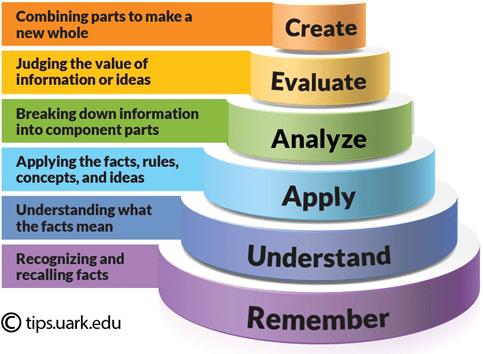
I think that in chapter 3 Larson brings up some salient points about assessment that are good for soon-to-be teachers to keep in mind. While everyone is in agreement (or at least most educators) that we do too much standardized testing and focus too much on grades and points, it is important not to push so far as to eliminate them altogether. It is impossible for administrators, district employees, parents, and community members to actively keep tabs on the progress of all students so we need a system that can provide aggregate data on all students within a class or school or district. Larson provides several ways to assess student learning that fulfills this requirement while also being dynamic enough to be helpful outside of the world of letter grades. I think the two powerful frameworks of cognitive and affective domain were especially helpful to me. While familiar with Bloom’s taxonomy I think it was both an important refresher and good to have it within the context of assessment. The section on affective domain was new information to me and I thought was also very important to understanding our students as complex emotional beings with biases, experiences, and conceptions. Larson also addresses how to design rubrics in a way that can accommodate the nuance of student understanding while still winding up with a tidy number scale. It is also worth pointing out to future or inexperienced teachers just how much agency the teacher has over deciding what constitutes a 3 out of 4 for example. There is still lots of “wiggle room” within the system for us to make decisions. Overall the chapter did a great job of reminding us that while it can be tempting to think we’re Robin Williams in Dead Poets Society we still need to provide hard evidence that the kids “get it” and unfortunately the best way to do that (that we know of so far) is formative, summative, and diagnostic assessment.
 Social Studies Methods-Lemon